Garden Ponds
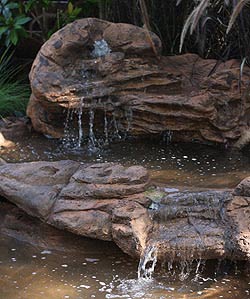 Ponds have long been a feature of gardens throughout the UK for many years and ideas for innovative designs will depend on the purpose of the pond as well as size and location within the garden.
Some are large and serve as a refuge for water birds, many are simply an ornamental design feature. We provide some ideas on how to go about building a simple garden pond including materials, construction, design and ideas on basic garden pond design.
Factors To Consider When Building A Garden Pond
- Slope:
Water Features usually a fall of about 30cm in 3m is enough for a stream to run.
- Water loss:
Water loss from water features can be minimised by using a good quality pond liner to line both the pond and stream. Stream-side planting to provide shade can also help minimise water loss through evaporation.
- Rock:
Rocks and stones lining a stream, pool or placed in a water feature can help give a natural look. Rocks around a pond also look great.
- Pumps:
Water flow is important in all water features, so a quality pump and filtration set up is essential. Pump suppliers can recommend an appropriate pump for the required water flow.
- Overflow:
It is essential to make provision for overflow from any water feature. Connect you pond to an overflow pit or a stormwater drain (consult your local council for regulations)
- Plants:
No water garden is complete without plants.
Astilbe, Dicentra, Lobelia, Aquilegia, Ferns, Hostas, Rhododendrons, Rodgersia, Water lilies all do well in damp conditions.
- Fish:
Fish such as Koi are very popular in ponds
Garden Pond Accessories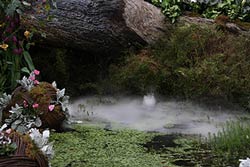
You could look for fountains to add impact to you pond. Misting fountains are readlily available.
Other Accessiores include :
- Filters
- Lighting< /li>
- Waterfalls
- Bridges
Building a Garden Pond
Make sure that when you first plan your idea for a garden pond that when build a pond you construct plant shelves as you go. Most water plants stay in pots placed on a pond shelf. A flat pond shelf deep enough for a medium to large pot to sit below water level is best.
Garden Pond liner should always be used, it is not a good idea to use black plastic. Rock, stone or paver to the waters edge add a great finnish. Pond pumps to circulate water are essential.
- POND DEPTH
Ponds need to be at least 600cm deep to allow for the water to stay cool and deep enough for water plants and fish. Consult you local council for regulations. - GARDEN POND PUMPS
Pumps for ponds are either mains power, solar power or low voltage, what you are looking for is a pump that provide the right amount of water flow for your pond design. - BUILD A POND IN A POT
Any large waterproof garden pot can be turned into a 'pond in a pot'. Water plants can be added and so can a basic fountain. Try a low voltage or solar powered pond pump. ¬?
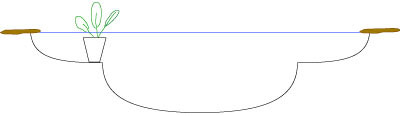
Simple Idea for a Basic Garden Pond Design Cross Section
MOWERS-ONLINE.CO.UK
We sell a large range of water pumps for home and grounds maintenance including petrol water pumps and electric garden water pumps
Water Garden Pumps
You May Also Like