Garden Hedges.
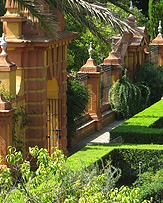
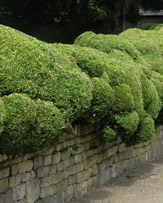
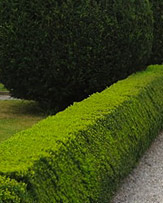
Every garden has the room for a garden hedge, a low growing hedge can act as divider in the garden, taller hedging plants work well as privacy screens and a flowering garden hedge can be a real eye catcher in season. With such a wide range of plants suitable for a garden hedge we provide a guide to suitable plants.
When planning a garden hedge take into account the following factors before choosing plants. required height of hedge
- Maintenance requirements for garden hedges
- Fast growing hedges or slower growing hedges
- Do you require a flowering hedge?
- Formal clipped hedge or informal
- Foliage color.
Fast Growing Garden Hedge Plants
One of the fastest growing hedge plants is Cupressocyparis leylandii available in both green or golden forms.
Prunus laurocerasus or 'english laurel', another fast growing hedge that is really very tough. Photinia a range of cultivars here, with its red tips on new growth photonia is another fast growing garden hedge. Look for the popular Photinia x fraseri. Or maybe try Photinia glabra the 'Japanese Photinia'.
Flowering Garden Hedge Plants
- The newest addition would be Magnolia Grandiflora 'Teddy Bear'. A tight growing evergreen magnolia that will reach 3m. Nice rounded foliage and larger flowers than 'Little Gem'
- Camellias, they make great flowering hedges, easy to prune if a little slow to get going. But worth the wait for a winter flowering hedge.
- Forsythia x intermedia (Golden Bell) fairly fast growing and great yellow flowers in late winter - spring.
- Pyracantha coccinea grown more for the colourful berries than the small white flowers, makes an interesting garden hedge. .
People who enjoyed this also liked