
Clivia plants and bulbs for the UK garden
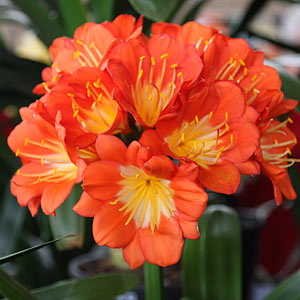
The well known Clivia miniata have been used as an indoor plant in the UK since the 1880s when the first clivia plants and seeds were sent from Africa. However many improved cultivars as well as other species are readiliy availoable for sale from specialist growers.
In the UK Cliva grow well in a conservatory and care and cultivation is relatively easy, however they do need to be protected from direct sunlight in order to prevent leaf scorch.
Clivia plants may also be grown indoors in a well lit room near a window. They require a well drained soil to perform best. We include clivia photographs and notes on many clivia species.
Clivia have been a very popular plant or bulb in the english garden and conservatory for nearly 200 of years.
Named after Lady Charlotte Florentia Clive, Duchess of Northumberland in 1828 by botanist John Lindley. Clivia miniata specimens were sent from South Africa to botanical institutions and private collectors.
And of course hybridisation has given us wonderf variets such as th Multipetal Clivia miniata bred by by A. Nakayama, pictured right.
Clivia Care
Clivia or clivias make a great indoor or garden plant, they love shade and as they can tolerate dry conditions once they have become established, they can be regarded as a drought tolerant plant.
These plants do not like to be planted in heavy soil, many growers use an aerated potting mixture such as perlite or composted pine bark mulch. In the ground, again they need good drainage. Look out for for Clivia Robusta, a giant clivia.
Clivia Varieties
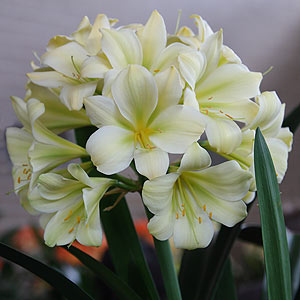 Clivia Miniata
Sometimes referred to as the 'Kaffir Lily' and is one of the most popular of the clivia sp.. The orange clivia miniata is probably the most common clivia in the UK. With flowers that point upwards, they thrive in the shade. Lots of new colours are available (see picture top right) from breeders, yellows, peaches, apricots, peaches and pale green. Breeders are working on a white clivia miniata, if you see a white one let us know.
- Clivia Nobilis
The first clivia species to be described. Named after Lady Clive, Duchess of Northumberland. Dark orange pendulous tubular flowers with green tips, varying from pinkish yellow to dark red . Flowering late autumn to spring.
- Clivia Gardenii
Flowering from autumn to late winter. Orange-red flowers with green tips, flowers varying from yellowish to a browny red. Flowers are more c urved and not as pendulous as those of Caulescens and Nobilis.
- Clivia Caulescens
Flowers spring to summer. Tubular flowers with flower heads being smaller than those of C.miniata.
- Clivia x Nimbicola
Nimbicola means 'dweller in the mist' so maybe this gives us a clue to its natural habitat. This species habit of flowering erratically throughout the year reflects on its parents C. miniata and C. caulescens. Flowers range from pastel orange to light pink.
Clivia Plants are available for sale from the following growers
SPECIAL PLANTS
Greenways Lane, Cold Ashton, Chippenham, Wilts SN14 8LA
Tel: 01225 891686
Includes: Clivia miniata
www.specialplants.net